The Real Reason Your Dashboard Cracks by Year Three
It is not age. It is UV exposure with nothing between the sun and your plastic and leather, and a South Jersey summer is the fastest way to speed up the clock.
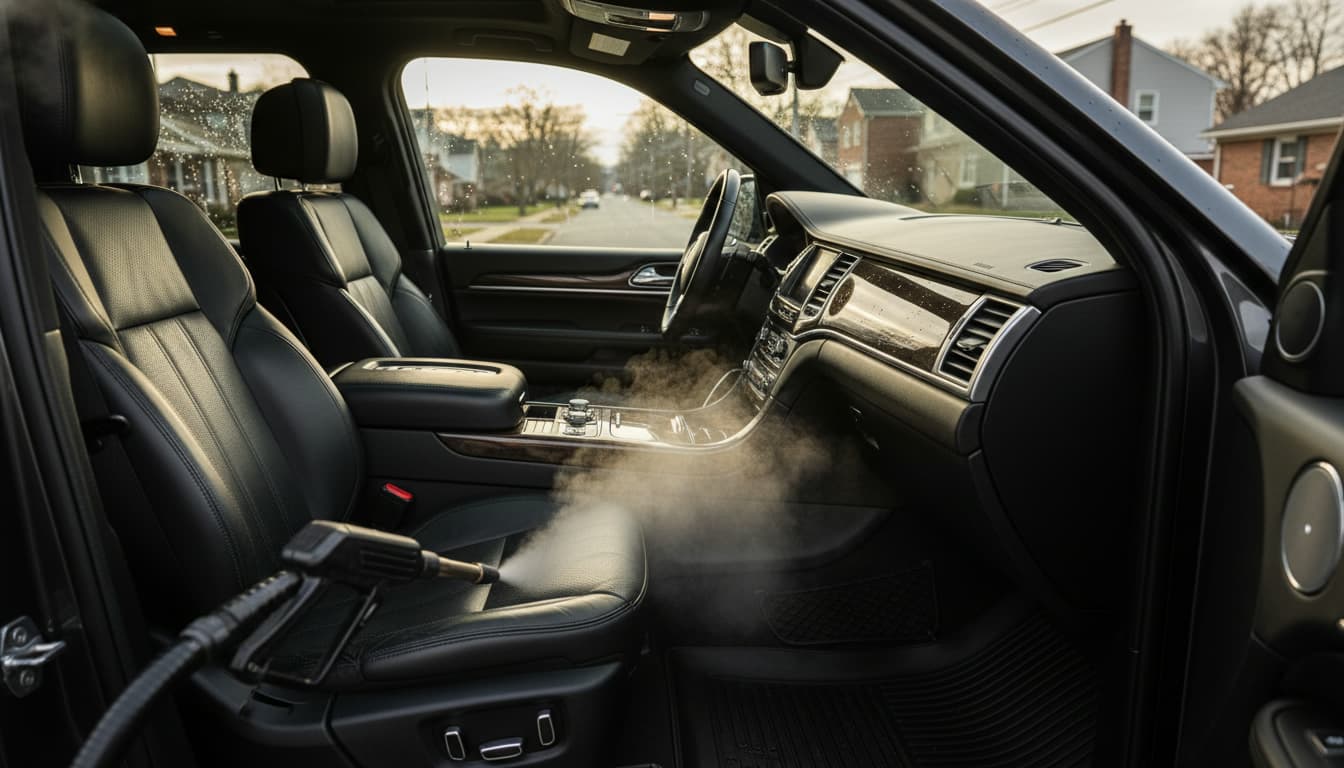
Park two identical cars side by side for three years. One lives in a garage. The other sits in a Cherry Hill driveway, windshield facing the afternoon sun every day. The garage car's dashboard still looks factory. The driveway car has a faded, slightly tacky dash and leather seats that have gone from supple to stiff, maybe even a hairline crack starting at the seam.
Neither owner did anything wrong. The driveway car just took three years of direct UV with nothing standing between the sun and the material. That is the whole story behind most dashboard and leather damage we see on service calls across South Jersey.
Why the dashboard goes first
A dashboard sits at the worst possible angle for sun exposure: nearly flat, facing straight up through the windshield, magnified by the glass like a low-grade greenhouse. Interior temperatures in a closed car on a 90-degree Lawnside afternoon can climb past 150 degrees on the dash surface itself.
That heat and UV combination breaks down the plastic and vinyl at a molecular level. The oils that keep the material flexible cook off. What is left behind is a surface that looks dull, feels slightly rough, and eventually cracks, usually starting at the edges near the defrost vents and the base of the windshield where the material gets the most direct hit.
Once a crack starts, it does not stop. It follows the flex points every time the dash expands and contracts with temperature swings, which in New Jersey means basically every day from March through October.
Why leather ages the same way, just quieter
Leather does not crack the way a dashboard does, at least not right away. It fades and stiffens first. Sun exposure dries out the natural oils in the leather, and without them the material loses its give. A seat that used to feel soft starts to feel like stiff cardboard, and the color goes from rich to chalky, especially on black and dark brown interiors that absorb more heat than lighter colors.
Heated seats make this worse. The combination of sun exposure and internal heating dries leather from both directions, which is why the driver's seat bolster (the part that takes both the most sun and the most heated-seat use) is almost always the first spot to show wear.
By the time you notice a crack in leather, the oils have been gone for a while. The stiffness and fading are the early warning. The crack is just the material finally giving up.
The fix is not complicated, but it has to actually happen
There are two parts to protecting interior surfaces, and most people only do the first one, if that.
Cleaning removes what is already damaging the surface. Dust, skin oils, and airborne grime build a film on plastic and leather that traps heat and holds UV against the surface longer. A proper interior detail starts with a pH-balanced cleaner on every plastic and vinyl panel, and a dedicated leather cleaner on seats that lifts grime out of the grain without stripping the little natural oil that is left.
UV protectant is the part that actually stops future damage. After cleaning, a UV protectant goes on the dashboard, door panels, and console. On leather, that means a real conditioner, not a shine spray. The difference matters. A shine spray sits on top and looks good in photos for a week. A conditioner replaces the oils the sun cooked off and includes UV blockers that absorb the next round of sun exposure instead of your dashboard absorbing it.
This is standard on every Triple T Package we do, and it is why customers who book us on a repeat schedule (every couple of months through the summer) have dashboards that still look close to new at year four or five, next to a neighbor's car that started cracking at year two.
What you can do between details
A full interior detail two or three times a year is the foundation, but a few habits stretch the protection further between visits.
- A sunshade in the windshield cuts direct UV on the dash by a meaningful margin on days the car sits outside for hours. It is the cheapest thing you can do.
- Crack a window slightly when parked in direct sun. It will not fix UV exposure, but it drops the peak interior temperature, which slows the heat-driven breakdown.
- Wipe the dash with a clean, dry microfiber cloth weekly. You are not cleaning much, you are just keeping grime from building the film that traps heat.
- Do not use dish soap or all-purpose household cleaner on leather. Both strip the oils faster than the sun does on their own.
None of that replaces a real cleaning and conditioning cycle. It just buys time between them.
If the damage is already done
If your dashboard already has a haze or a faded look but no cracks yet, a deep clean and UV protectant treatment usually brings back most of the finish and stops it from progressing. Once a crack has started, no product reverses it. At that point the honest answer is a dash cover or, for leather, a professional repair. The goal from here is protecting what is left so it does not spread to the rest of the interior.
We see the difference every week across Cherry Hill, Voorhees, Haddonfield, Audubon, and Collingswood: cars with a maintenance rhythm hold their interior finish for years past the ones getting cleaned once a year, if that. If you want a straight read on where your interior stands, book a detail here or text Tyree at (856) 562-9283 and we will tell you honestly whether it is a routine clean or something more.
Keep reading
What Summer Heat Does to Your Car's Paint in South Jersey
UV and heat cycles quietly degrade your clear coat all summer. Here is what is actually happening under the surface, and what slows it down.
How Often Should You Get Your Car Detailed?
The honest answer depends on your car, your driveway, and which season we are in. Here is the framework we use with South Jersey customers.
What a Full Interior Car Detail Actually Includes
The gap between a quick wipe-down and a real interior detail is about three hours of work and a stack of tools most people do not own. Here is exactly what goes into one.