Are Your Headlights Worth Restoring? The Honest Answer
Oxidized lenses can cut road illumination by up to 80 percent. Here is what restoration fixes, what it does not, and when replacement is the smarter call.
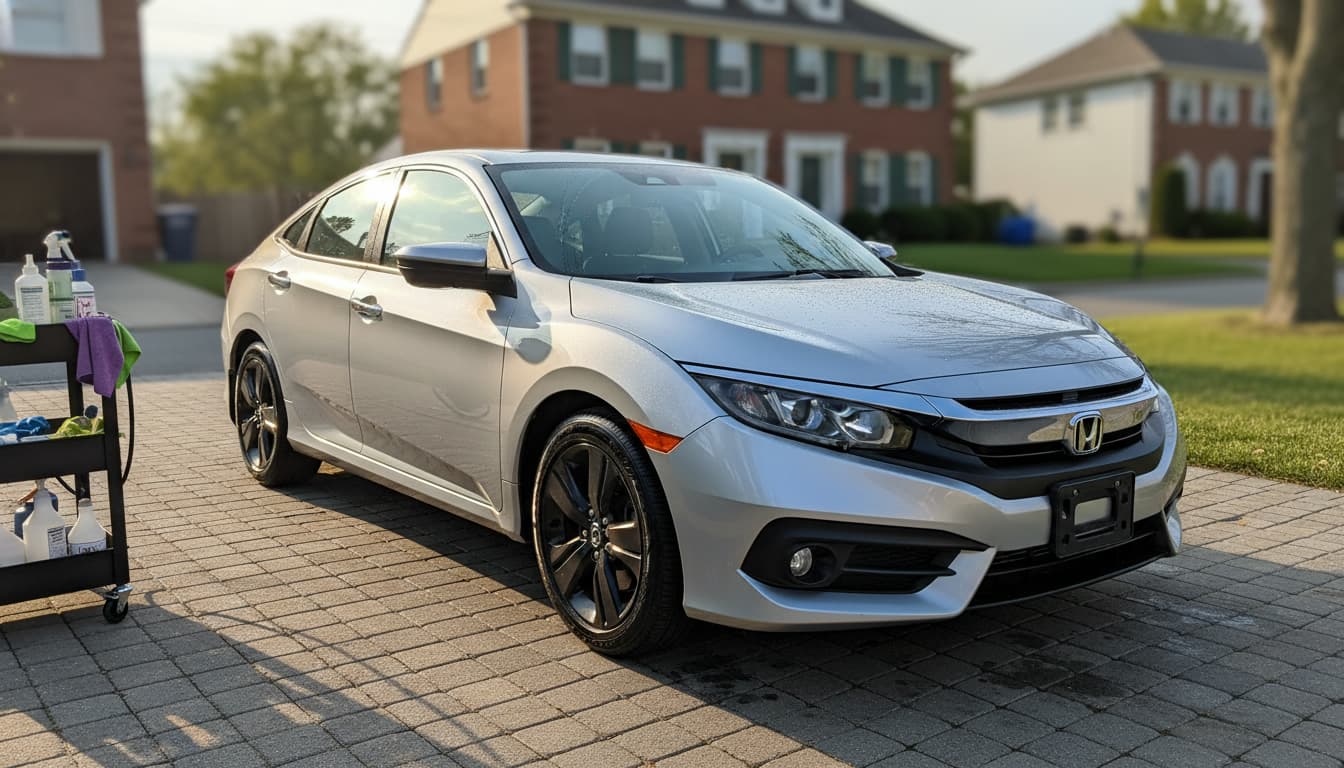
Pull up behind your own car in a parking lot at night and look at the headlights. If the lenses look like someone rubbed them with sandpaper, that is oxidation, and it is costing you more than just curb appeal.
AAA research found that oxidized headlights can reduce road illumination by up to 80 percent compared to clear lenses. That is not a cosmetic problem. It is a visibility problem on the Route 30 stretch through Haddonfield at 9pm in October, or on any unlit South Jersey back road once the clocks change.
Why headlights turn yellow in the first place
Modern headlight lenses are polycarbonate plastic, not glass. Polycarbonate is lightweight and impact-resistant, but it reacts to UV over time. The factory-applied clear coat degrades, and the exposed plastic underneath oxidizes, yellows, and eventually goes chalky white.
Cars parked outside in South Jersey accelerate this process. The sun angle from April through September is aggressive here. Road salt and pollen residue add chemical wear on top of the UV damage. Most lenses start showing visible yellowing between years 5 and 7 of a vehicle's life, sometimes earlier on dark-colored cars that absorb more heat.
What restoration actually involves
Restoration is not waxing the lens. It is removing the oxidized layer by working through several sanding grits, then polishing the exposed plastic back to optical clarity, then sealing the surface with a UV-blocking coating so the oxidation does not return in six months.
Done properly, the process takes 45 to 90 minutes per pair. Done sloppily, which is how most $20 auto-parts-store kits turn out, the lens looks clear for a few weeks and then hazes back worse than before. The sanding removes the old factory coating. If you do not apply a solid UV sealant afterward, you have exposed raw polycarbonate directly to the sun and sped up the oxidation cycle.
This is the part the kit instructions skip over. The sealant step is not optional.
Restoration vs. replacement
New OEM headlight assemblies run $150 to $800 per side on most vehicles, and that is before labor. Aftermarket alternatives are cheaper but often fog faster because the polycarbonate quality is lower.
Professional headlight restoration at To The T costs a fraction of that, and when done with proper sealing, lasts 2 to 4 years before needing a refresh. If the lenses are cracked, have moisture intrusion inside the housing, or the polycarbonate has degraded past the outer oxidized layer, replacement is the right call and we will say so.
The math is straightforward. If restoration costs significantly less than an insurance claim or out-of-pocket replacement, and the lenses are structurally sound, restoration wins.
The safety case is the one that actually matters
Tyree has been working on and around vehicles for years, first in diesel mechanics, then in paint and detail work. The headlight conversation comes up almost every time we do an initial detail on a car that is more than six years old.
A business that has earned 253-plus five-star Google reviews across Lawnside, Cherry Hill, Haddonfield, and Voorhees does not stay at 5.0 stars by finding problems that are not there. When we mention headlight condition during a visit, it is because the lenses are genuinely limiting what you can see and what other drivers can see of you on the road.
The NJ vehicle inspection program does not currently fail cars for headlight clarity. That means a car can be legally on the road with 80 percent less effective forward lighting. The legal standard and the safety standard are two different numbers.
When to skip restoration and just replace
If the lenses are cracked, if you can see condensation pooling inside the housing, or if the clouding is on the interior surface rather than the outside of the lens, no amount of exterior polishing fixes that. Polishing works on oxidation on the outer surface. It cannot address a compromised housing seal or internal fogging. In those cases, replacement is the only answer that actually solves the problem.
Same logic applies if the vehicle is less than four years old and the lenses are already showing significant yellowing. That can indicate an issue with the original coating or unusual UV exposure, and the lens geometry may have degraded to a point that polishing will not correct.
How it fits into a full detail visit
Most customers who book a Triple T Package and mention their headlights during booking get the restoration added on the same visit. We are already at your driveway in Cherry Hill, Haddonfield, Voorhees, or wherever you are in South Jersey. Adding a headlight restoration saves you a separate scheduling step.
If restoration is all you need right now, we can do that as a standalone service. Text (856) 562-9283 to get on the schedule.
A quick test before you call
Stand 10 feet in front of your car at night with the headlights on. If the light spread on the ground looks dim, yellowish, or uneven from side to side, oxidation is the likely cause. If the pattern looks sharp and white but one side is dimmer, you might have a bulb issue instead, which is a much cheaper fix.
Restoration is worth it when the lenses are the bottleneck. If they are not, we will tell you.
Book your detail or headlight restoration visit here and we will check the lens condition in person before committing you to anything. No upsell to a service you do not need.
Keep reading
The Real Reason Your Dashboard Cracks by Year Three
It is not age. It is UV exposure with nothing between the sun and your plastic and leather, and a South Jersey summer is the fastest way to speed up the clock.
What Summer Heat Does to Your Car's Paint in South Jersey
UV and heat cycles quietly degrade your clear coat all summer. Here is what is actually happening under the surface, and what slows it down.
How Often Should You Get Your Car Detailed?
The honest answer depends on your car, your driveway, and which season we are in. Here is the framework we use with South Jersey customers.