The Two-Bucket Wash Method: What It Is and Why It Matters
The single change that does more to protect your paint than any wax or coating. Two buckets, a grit guard, and the right order.
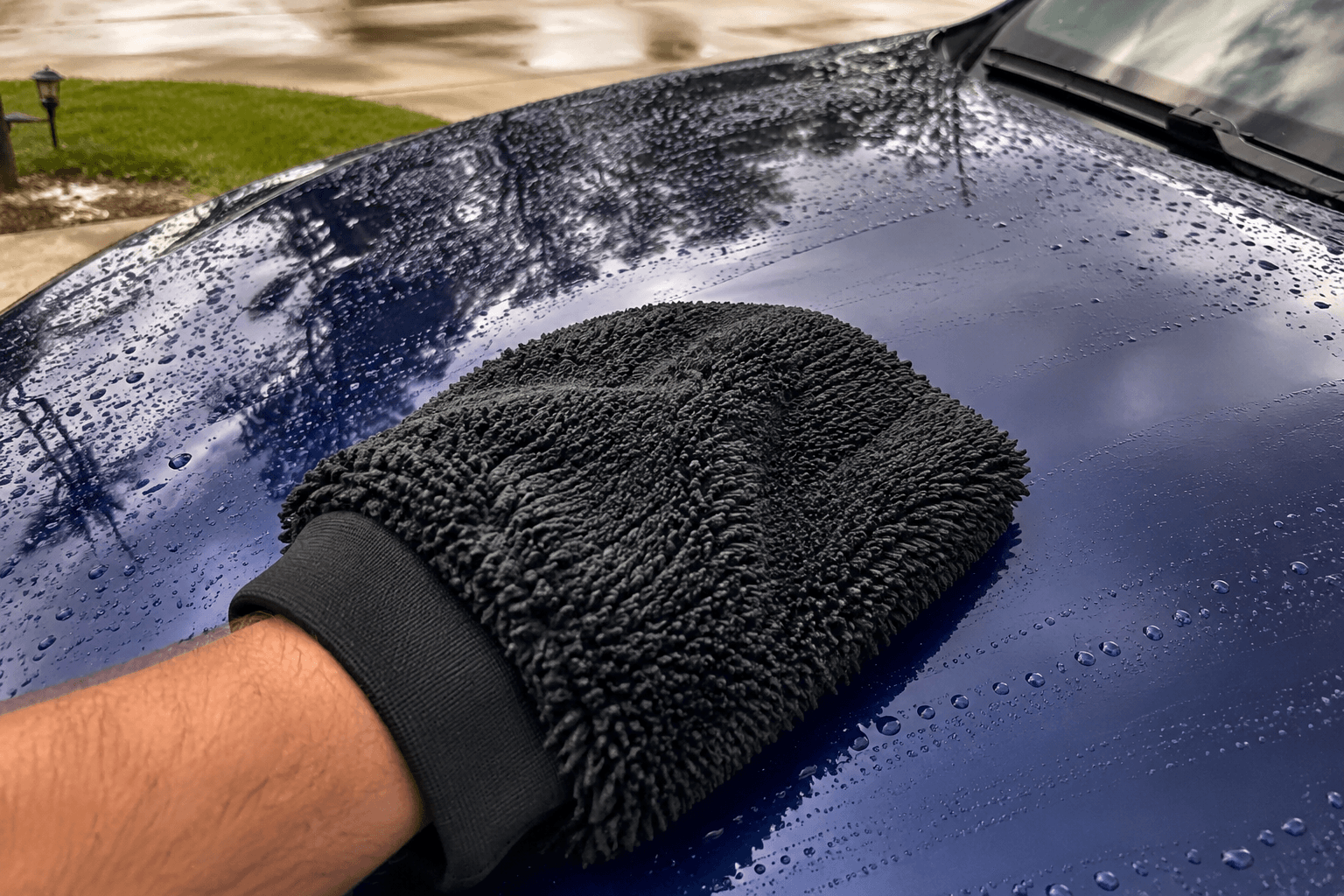
Most swirl marks you see on a car under direct sun were not put there by an accident. They were put there by a wash. Every wash that drags dirt across the paint instead of lifting it off leaves a microscopic scratch behind. Multiply that by 100 washes over the life of a car and the result is the cloudy, hazy paint you can spot a parking lot away.
The single biggest change you can make at home is the two-bucket wash method. It costs about $30 in supplies and it does more to protect your paint than any wax or coating on top.
What goes wrong with one bucket
A normal one-bucket wash looks like this. You dip the mitt in soapy water, drag it across a dirty panel, then dip the mitt back into the same bucket. The dirt you just picked up now lives in the soap, and the next pass smears it back onto the paint.
The mitt feels clean because it is wet. The water in the bucket looks fine because it is dark with soap. The damage is happening at a scale you cannot see until the sun catches it later.
The two-bucket setup
Two buckets, two jobs.
- Bucket one is your wash bucket. Clean water and your soap of choice. The mitt only goes from here to the car.
- Bucket two is your rinse bucket. Clean water, no soap. After every panel, the mitt goes here first, gets agitated to release the grit, and only then returns to the wash bucket for more soap.
The rinse bucket is the whole point. It is where the dirt goes to die. Your wash bucket stays clean because nothing dirty ever touches it.
The grit guard upgrade
Drop a grit guard in the bottom of each bucket. It is a plastic grid that costs around $10. Two things happen.
First, when you push the mitt down against the guard in the rinse bucket, the agitation knocks loose every piece of grit you just picked up. The grit settles below the guard and stays there.
Second, when you reach back into the wash bucket, the mitt cannot accidentally pick up settled debris from the bottom because the guard separates it from your clean water layer.
You can wash a car without grit guards. You should not.
Wash order matters
Always start at the top and work down. The roof and upper panels collect the least dirt. Lower panels collect the most. Working top to bottom means you are not dragging lower-panel grit back up across cleaner paint.
Within a panel, wash in straight lines, not circles. If a scratch happens, a straight one is invisible. A circular one catches light from every angle and becomes a permanent swirl.
Save the wheels and lower rocker panels for last, with a separate mitt. Brake dust and road salt belong nowhere near the mitt you use on the paintwork.
Common mistakes we see all the time
A few patterns we hit on almost every detail we do for a customer who has been washing the car themselves.
- Using a sponge instead of a microfiber mitt. Sponges hold grit on the surface. Microfiber lifts grit up off the surface and into the fibers, away from the paint.
- Skipping the prewash rinse. Spray the whole car down with a hose first. Most of the loose dirt comes off before the mitt ever touches the car.
- Washing in direct sun. Soap dries on the panel before you can rinse it, leaving water spots. Park in the shade or wash in the morning.
- One bucket plus a rinse hose. Better than nothing, but the hose stream is not aggressive enough to release the deep grit from the mitt. The rinse bucket with agitation does.
Where this fits if your car is coated
If you have a ceramic coating from us, the two-bucket method is what protects the coating from wear. Ceramic does not stop scratches from a contaminated mitt. It just makes the paint underneath last longer if you treat it right. A coated car washed with a one-bucket method will need to be topped up years sooner than the same car washed properly.
The reverse is also true. A daily driver with no coating, washed with the two-bucket method by an owner who cares, can outlast a coated car in the next driveway over. The method matters more than the product on top.
Want us to handle it
If hand-washing every two to three weeks is not realistic for you, that is what our Triple T Package covers. We bring everything to your driveway and do the full reset every month, every other month, or on whatever cadence keeps your car looking right. Text us at (856) 562-9283 and we will work out a schedule that fits.
Keep reading
The Real Reason Your Dashboard Cracks by Year Three
It is not age. It is UV exposure with nothing between the sun and your plastic and leather, and a South Jersey summer is the fastest way to speed up the clock.
What Summer Heat Does to Your Car's Paint in South Jersey
UV and heat cycles quietly degrade your clear coat all summer. Here is what is actually happening under the surface, and what slows it down.
How Often Should You Get Your Car Detailed?
The honest answer depends on your car, your driveway, and which season we are in. Here is the framework we use with South Jersey customers.