Bug Guts and Tar Are Quietly Ruining Your Paint
The 48-hour window that decides whether a summer road trip costs you a wash or a polish session, and what to do before that window closes.
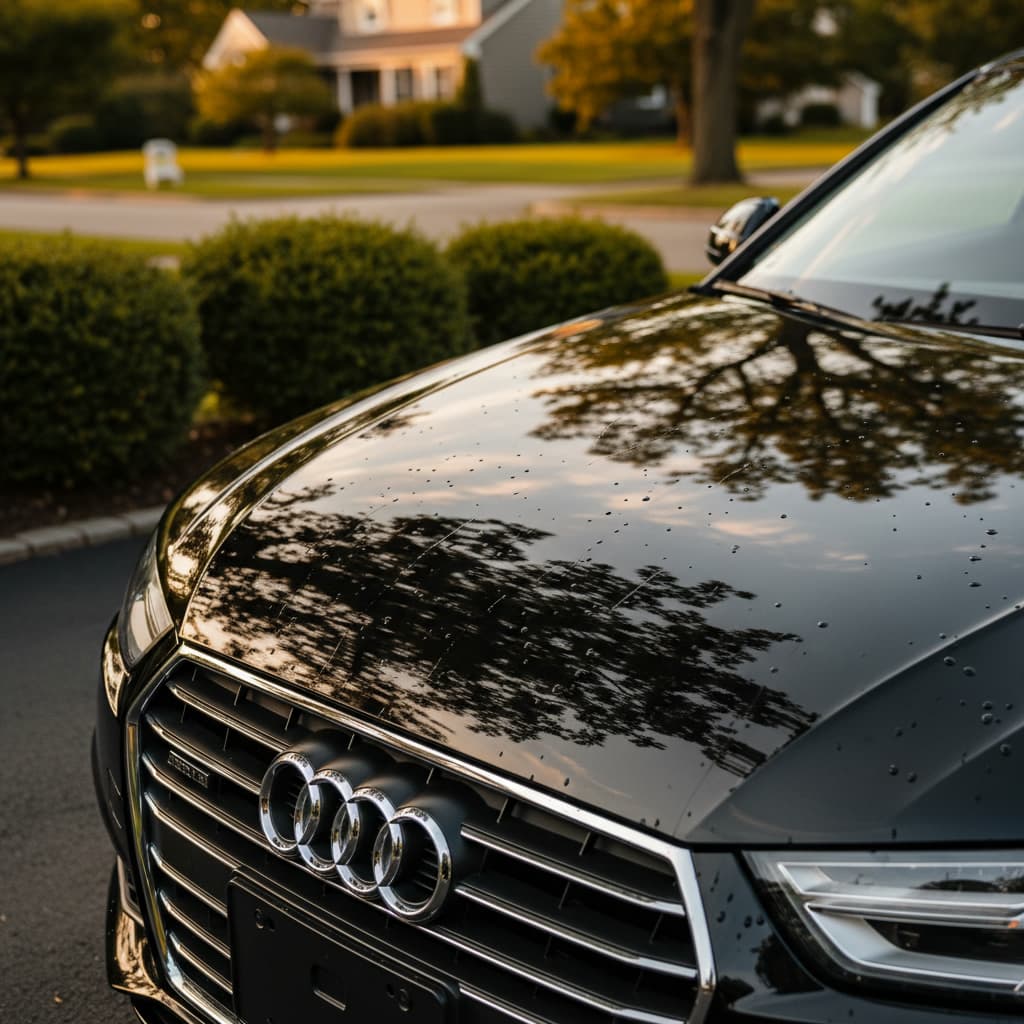
Pull into your driveway after a run down to Ocean City or Wildwood and the hood looks like a crime scene. Bug splatter across the leading edge, a streak of tar behind the front wheels, maybe a fresh sap drip from wherever you parked for lunch. Most people wipe the windshield, call it good, and deal with the rest "this weekend."
That delay is the expensive part.
Why bugs are worse than dirt
Road dirt just sits on top of clear coat. Bug residue is different. It is acidic, and once it dries in the sun it starts etching into the clear coat itself rather than sitting on the surface. On a hot hood, that bonding process can be underway within a few hours. Left for 24 to 48 hours, what started as a surface splatter becomes a shallow pit that a wash will never remove. At that point you are not looking at a rinse, you are looking at a one-step machine polish to level the paint back out.
Tar behaves differently but ends the same way. It stays soft longer, so it is more forgiving, but it grabs onto anything it touches. Wipe it with the wrong towel and you drag grit across the panel with it, which is how a tar spot turns into a cluster of fine scratches.
Tyree ran highway miles for years as a diesel technician before he started detailing, and the trucks he worked on told the same story every summer: the ones that got wiped down after every long haul kept their paint. The ones that waited needed correction work by August.
The 48-hour rule
If you take one thing from this post, make it this: treat anything on your hood, bumper, or mirrors as a same-day problem during bug season, not a weekend problem.
You do not need a full detail to buy yourself time. A quick rinse and a dedicated bug-and-tar spray, wiped in straight lines with a clean microfiber towel, is enough to stop the etching process before it starts. Skip the sponge. Sponges hold grit against the paint instead of lifting it away, and a sponge dragged through fresh bug residue is how a five-minute fix turns into a swirl mark you notice next spring.
What we actually do when it has already set in
By the time most customers call us, the residue has been sitting for a week or two and a spray-and-wipe will not touch it anymore. Here is the real process:
- Foam pre-wash to lift loose grime without touching the paint directly, so nothing gets dragged across the bonded spots.
- Clay bar pass over the hood, mirrors, and leading edges to pull out anything the wash missed. This is where we usually feel dozens of tiny bumps under a hand that looked perfectly smooth from three feet away.
- One-step machine polish on affected panels to level out the etching and bring back gloss and reflection.
- Sealant or ceramic top coat, so the next round of bugs slides off instead of bonding again.
That last step is the one people skip and regret. A car with no protection on it is a blank surface for the next road trip to start the whole cycle over. If you already have one of our ceramic coatings, this is dramatically less of an issue. Coated paint sheds bug residue in the next wash instead of holding onto it, which is a big part of why coated cars stay glossier through a full South Jersey summer.
Prevention beats correction every time
Before a big trip down the Parkway, a quick pass of spray sealant on the front-facing panels costs you fifteen minutes and makes the whole mess wipe off instead of bond on. It will not stop bugs from hitting the car. It stops them from sticking.
If your car has gone a season or two without protection, this is also a good moment to think about a proper coating instead of reapplying a $15 spray every few weeks. We have installed enough of these for daily drivers in Voorhees, Cherry Hill, and Haddonfield to know the ones that get coated stop showing up on our correction list. The ones that do not, keep showing up every summer with the same hood.
If your paint already needs a reset
We have 253+ five-star reviews on Google from South Jersey drivers who called us after exactly this situation: a summer's worth of bug splatter and tar that a home wash could not fix anymore. As a System X authorized ceramic coating installer, we do not just polish it and send you off to repeat the cycle. We correct the paint, then lock in protection so the next road trip does not undo the work.
If your hood is past the wipe-it-off stage, start with our paint enhancement service and we will tell you honestly whether a light polish or a deeper correction is the right call. Book a quote and we will come to your driveway anywhere in South Jersey, no drop-off required.
Keep reading
The Real Reason Your Dashboard Cracks by Year Three
It is not age. It is UV exposure with nothing between the sun and your plastic and leather, and a South Jersey summer is the fastest way to speed up the clock.
What Summer Heat Does to Your Car's Paint in South Jersey
UV and heat cycles quietly degrade your clear coat all summer. Here is what is actually happening under the surface, and what slows it down.
How Often Should You Get Your Car Detailed?
The honest answer depends on your car, your driveway, and which season we are in. Here is the framework we use with South Jersey customers.