Paint Correction: What It Fixes (And What It Doesn't)
Not every paint defect polishes out, and knowing the difference before you book saves money and sets the right expectations.
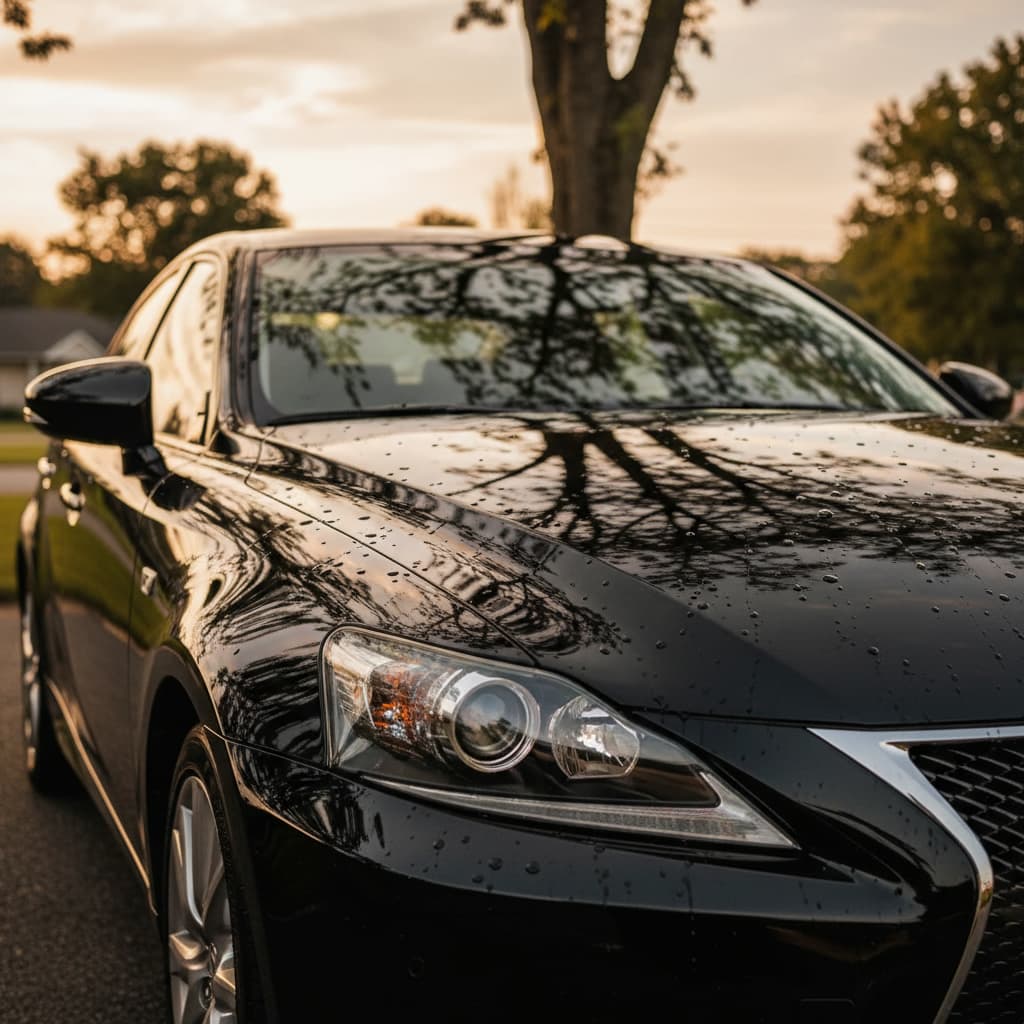
Your hood looks fine until the afternoon sun hits it at the right angle. Then you see it: a faint web of fine scratches running in all directions, most visible on darker paint, nearly invisible on white unless you know what to look for. That pattern is swirl marks, and it is the most common result of years of automatic car washes and well-meaning but gritty wash mitts.
Paint correction fixes that. It also fixes a lot of other things. But it does not fix everything, and understanding the difference before you book prevents disappointment and wasted money.
What paint correction actually does
Paint correction is machine polishing. A rotary or dual-action polisher with a cutting compound removes a thin, controlled layer of clear coat to level the surface. Swirl marks and fine scratches live in the clear coat, not below it. Once the surface is leveled, those scratches cease to exist because there are no edges left to catch light.
The process usually runs in two stages. A one-step paint enhancement uses a single cut-and-finish cycle and typically eliminates 50 to 70 percent of visible defects. That is the right call for paint in decent shape that needs a reset before a ceramic coating or as part of a thorough detail. A multi-step correction goes deeper, using progressively finer compounds and pads to reach 90 percent correction or better. That is what we do on heavily swirled paint or a car coming out of a long period of neglect.
What it does not fix
This half of the answer matters just as much.
If a scratch catches your fingernail, it has cut through the clear coat into the base coat or primer below. Polishing the clear coat around that scratch can soften how visible it looks by feathering the edges, but the scratch itself will not disappear. That situation calls for touch-up paint or body work, not polishing.
Bird droppings and tree sap left sitting through a New Jersey summer can etch into the clear coat past the depth correction can reach. Polishing smooths the surface but leaves a dull spot where the etching went deep. The same is true for water spot damage from mineral-heavy water baked onto paint in direct sun over multiple cycles.
Faded paint that has lost pigment - common on older reds and some metallics - is a different problem. Polishing removes dead surface material and improves clarity, but if the pigment itself has degraded from years of UV exposure, no amount of machine polishing restores the original color. That job belongs to a body shop, not a detailer.
When paint correction is worth it in South Jersey
Most daily drivers across Cherry Hill, Haddonfield, Voorhees, Collingswood, and Lawnside fall somewhere in the middle: enough swirl marks from touchless washes and parking lot door dings to show up in sunlight, but no deep scratches that need body work. For paint in that condition, a one-step enhancement before a ceramic coating is one of the better investments you can make in a car you plan to keep.
The order of operations matters here. A ceramic coating locks in whatever surface it is applied to. If you coat swirled paint, you have permanently protected swirled paint. Ceramic coatings do not fill or hide defects the way wax does. They amplify clarity. Swirls under a ceramic coating are sharper and more visible, not softer. A paint enhancement first, then ceramic over the top, is the sequence that actually makes sense.
If you are doing a full detail without adding ceramic, correction is still worth it on a car you care about. Paint with fewer surface scratches stays visibly cleaner between washes because there are fewer microscopic edges for dirt and road film to grip onto.
The case for correction before you sell
One situation that comes up regularly: owners who are prepping a car to sell. A thorough paint correction on a vehicle with tired, swirled paint is one of the highest-return investments before listing. Clean paint reads as a well-maintained car. Buyers who know what they are looking at will offer more, and buyers who do not know what they are looking at will still prefer the car that looks sharp over the one that looks dull.
The Triple T Package with a paint enhancement added is the most common combination we do on pre-sale prep visits. Interior reset, exterior correction, and the car goes to market looking right. We come to your driveway anywhere in South Jersey.
What the process looks like on a visit
Before anything touches the paint, we evaluate the clear coat under inspection lighting. That step determines whether the paint is a candidate for one-step correction, multi-stage correction, or whether a specific panel has damage that polishing won't fully address. If it is the last one, we say so before we start.
Machine polishing adds time to any visit. Each panel requires multiple passes and needs to be wiped and checked between stages. A one-step correction on a midsize sedan typically takes 3 to 4 hours on its own. Multi-step adds 2 to 4 hours on top of that.
Tyree started in diesel mechanics because he liked understanding exactly how things work and why they fail. The same thinking applies to paint correction: skip the proper inspection step and you are guessing. Guess wrong and you either under-correct or damage clear coat that did not need to be touched. The evaluation is the job.
A quick test you can do yourself
Find a spot with direct sunlight and look across the horizontal surfaces of your hood and roof at a low angle. Swirl marks show up as a faint web pattern under direct light. Isolated light scratches look like short parallel lines. Deep scratches stay just as visible when you look straight on as when you look at an angle.
Run a clean hand across the paint on a freshly washed panel. A car with a healthy coating or fresh correction feels almost frictionless, like glass. Paint that needs work feels slightly rough, almost like fine sandpaper at the microscopic level.
If you are seeing the web pattern and the surface feels rough, paint correction is the right call. If you are seeing isolated scratches that catch your fingernail, mention them specifically when you book. We will evaluate each one and tell you what is realistic.
No upsell, just an honest look
We have 253-plus five-star Google reviews across South Jersey because we tell people what their car actually needs, not what costs the most. If correction would not meaningfully improve your paint, we will say so.
Book a visit here or text (856) 562-9283. We will assess the paint in person before committing you to anything, and the evaluation does not cost extra.
Keep reading
The Real Reason Your Dashboard Cracks by Year Three
It is not age. It is UV exposure with nothing between the sun and your plastic and leather, and a South Jersey summer is the fastest way to speed up the clock.
What Summer Heat Does to Your Car's Paint in South Jersey
UV and heat cycles quietly degrade your clear coat all summer. Here is what is actually happening under the surface, and what slows it down.
How Often Should You Get Your Car Detailed?
The honest answer depends on your car, your driveway, and which season we are in. Here is the framework we use with South Jersey customers.